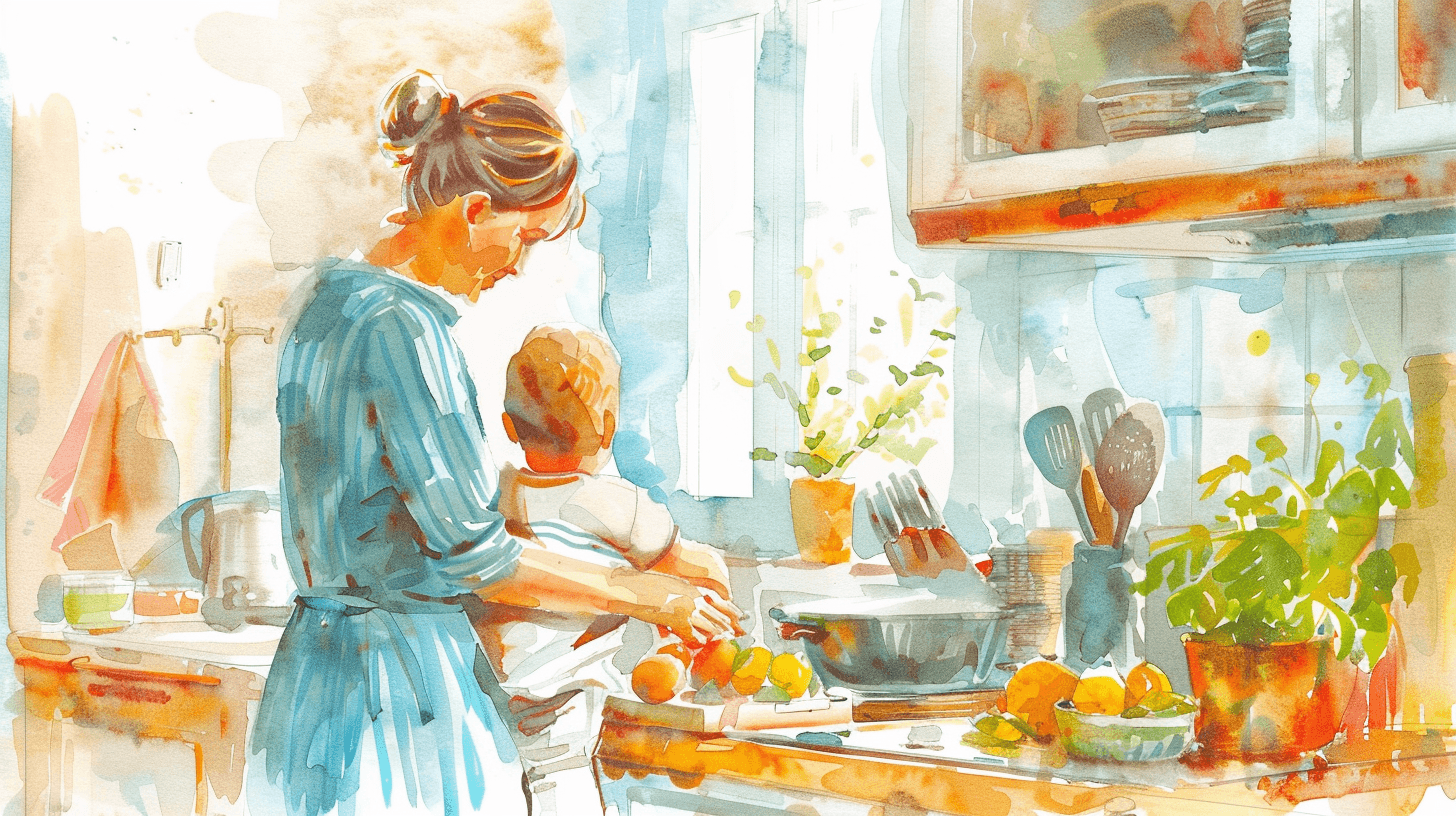


Postpartum depression doesn't just affect the mother—it impacts the entire family system, especially the couple's relationship. Research shows that 67% of couples experience a significant drop in relationship satisfaction during the first year after having a baby, and when PPD is present, the strain intensifies. The good news: with treatment and intentional effort, most couples emerge stronger. Here's how to get there.
Why Postpartum Depression Is So Hard on Relationships
When postpartum depression enters the picture, several forces stack up at once.
One partner is emotionally unavailable. Depression numbs emotions and drains energy. The mother with PPD can't provide emotional support, intimacy, or partnership the way she did before—not because she doesn't want to, but because depression has hijacked her brain's ability to feel and connect.
Unequal division of labor. Partners often take on the majority of household tasks, baby care, and emotional labor while working full-time. This creates exhaustion and resentment. Meanwhile, the mother feels guilty for "not pulling her weight" but is too depressed to function—a shame spiral.
Communication breakdown. Depression makes mothers irritable, withdrawn, or emotionally reactive. Partners don't understand why she's "changed" or why nothing they do helps. Misunderstandings escalate into conflicts. Both partners feel unheard and alone.
Loss of intimacy. Physical intimacy drops to zero for weeks or months due to pain, fatigue, body image issues, and depression killing libido. Emotional intimacy disappears as conversations revolve only around logistics and baby care. Partners feel like roommates, not lovers.
Sleep deprivation amplifies everything. Lack of sleep impairs emotional regulation, increases irritability, and amplifies conflict. Both partners are running on empty, making it harder to be patient, understanding, or generous with each other.
Different expectations and coping styles. One partner may expect the other to "bounce back" quickly. One may want to talk about feelings constantly; the other wants to fix problems and move on. These mismatches create frustration and disconnection.
Grief for the "before baby" relationship. Both partners grieve the loss of spontaneity, freedom, couple time, and the ease of their pre-baby relationship. This grief is normal but rarely discussed, leading to unspoken resentment about "what we lost."
Here's what's important to hold onto: relationship strain during PPD is normal and expected. It doesn't mean your relationship is doomed or that you made a mistake having a baby. With treatment and intentional effort, most couples report their relationship becomes stronger after weathering this storm together.
Common Conflict Patterns During Postpartum Depression
Recognizing these patterns is the first step to breaking them.
The criticism-defensiveness cycle. Mother criticizes partner for not helping enough. Partner gets defensive: "I'm doing everything!" Mother feels unseen and criticizes more. Partner withdraws. It happens because both are overwhelmed and feel underappreciated, and PPD amplifies perceived slights into major grievances. To break it, use "I feel" statements instead of blame: "I feel overwhelmed and need more help with X" rather than "You never help."
Pursuer-distancer dynamic. One partner (often the non-depressed one) pursues connection: "Talk to me! What's wrong?" The depressed partner withdraws further: "I need space. Leave me alone." Depression causes withdrawal; the partner interprets it as rejection and pursues harder, which feels suffocating. To break it, the pursuer gives space but checks in gently, and the distancer communicates the need for space without rejection: "I need 30 minutes alone, then let's connect."
The resentment spiral. One partner does most of the work and feels resentful but doesn't say anything. Resentment builds and eventually explodes in a big fight. The mother feels attacked and defensive. It happens because the partner doesn't want to burden her "since she's already struggling," so resentment accumulates until it boils over. To break it, address issues when they're small: "I'm exhausted. Can we figure out a better division of labor?"
Mismatched emotional needs. Mother needs validation and empathy. Partner tries to solve problems or offer advice. Mother feels dismissed ("You're not listening!"); partner feels frustrated ("I'm trying to help!"). It's a difference in communication styles—partners often default to fixing when listening is what's needed. To break it, ask: "Do you want me to listen or help problem-solve?" Most of the time during PPD, she needs validation, not solutions.
Contempt and stonewalling. Eye-rolling, sarcasm, mockery, or complete shutdown during conflict. One or both partners check out emotionally. This is advanced relationship distress—often years of unresolved conflicts layered on top of postpartum stress. A warning worth taking seriously: contempt is the number-one predictor of divorce. If this is happening, seek couples therapy immediately.
Communication Strategies That Actually Work
Healthy communication during PPD looks different than "normal" relationship communication. Here's what helps.
1. Lower your expectations (temporarily). You're not going to have deep conversations or weekly date nights right now, and that's okay. Aim for 10-minute daily check-ins ("How are you feeling today? What do you need?"), logistics conversations without conflict, moments of kindness and appreciation, and simply not making things worse by avoiding contempt and criticism.
2. Use the "soft startup" for difficult conversations. How you start a conversation predicts how it will end. Instead of accusatory starts ("You never…"), try soft startups: "I feel overwhelmed when I handle all night wakings. Can we split them 3 nights each?" or "I miss feeling connected to you. Can we sit together for 10 minutes tonight?" or "I'm struggling today. I need help with dinner and bedtime." Steer away from "You never help at night!" or "You don't care about our relationship anymore."
3. Practice active listening. When your partner is sharing (especially if she's depressed), resist the urge to defend, explain, or fix. Repeat back what you heard ("It sounds like you're feeling overwhelmed and unsupported"), validate feelings ("That makes sense. This is really hard."), ask "What would help right now?", and then problem-solve if she wants that.
4. Call timeouts before escalation. If a conversation is getting heated, say "I need a 20-minute break. Let's come back to this," then actually take the break—walk around the block, breathe, calm down—and return once regulated. Never use timeouts to avoid; only to de-escalate.
5. Express appreciation daily. Research shows a 5:1 ratio of positive to negative interactions predicts relationship success. During PPD, make deposits in the relationship bank: "Thank you for handling bedtime tonight," "I see how hard you're working," "You're a great parent," plus small physical affection—a hand squeeze, a hug, a kiss on the forehead.
Rebuilding Physical and Emotional Intimacy
Intimacy—physical and emotional—often disappears during postpartum depression. Here's how to slowly rebuild connection.
Emotional intimacy first. Physical intimacy requires emotional safety, so start here: a 15-minute daily connection ritual (coffee together after baby's first nap, a 10-minute walk, a bedtime check-in without phones), sharing appreciations ("One thing I'm grateful for about you today is…"), a vulnerability practice (share one feeling each day: "Today I felt…"), and no-agenda time together where you sit side by side, watch a show, or cook—no talking required.
Non-sexual physical intimacy. Rebuild physical closeness without the pressure of sex: hand-holding, hugs, cuddling on the couch, back rubs and foot massages with no expectation of more, kissing hello and goodbye, and sleeping close together when possible.
Rebuilding sexual intimacy (slowly). Most couples resume sex 6-12 weeks postpartum, but with PPD the timeline extends. Wait for medical clearance (6 weeks minimum, often longer with PPD). Talk about expectations—what feels safe, what's off the table for now. Start small with kissing and touching without the goal of intercourse. Use lubrication, since hormonal changes cause vaginal dryness postpartum. Be patient with body image; bodies change after birth, so go slow. And no pressure—if she's not ready, respect that, because pressure creates avoidance. One important note: low libido is a symptom of depression. As PPD improves, desire typically returns. This isn't about you—it's neurobiology.
The importance of "couple time." Even 10 minutes daily of focused couple time (no baby talk, no logistics) helps: a morning coffee ritual before baby wakes, an evening wind-down after baby's bedtime, weekend walks with baby in the stroller so you can talk without chores distracting, and a monthly date—even 1-2 hours out of the house matters.
When to Seek Couples Therapy
Some relationship problems resolve once PPD is treated. Others need professional help.
Seek help immediately if: there's constant contempt, criticism, or stonewalling (Gottman's "Four Horsemen"); one or both partners are considering separation or divorce; there's verbal, emotional, or physical abuse; there's infidelity or a major trust breach; or communication has completely broken down (weeks of not talking).
Seek help within 2-4 weeks if: you're fighting frequently and it escalates quickly, you feel like roommates rather than partners, you can't resolve conflicts constructively, one partner's resentment is corrosive, different parenting philosophies are causing major conflict, or relationship problems are interfering with PPD recovery.
Consider therapy when PPD stabilizes if: you want to improve communication skills, rebuild intimacy and connection, process the trauma of a difficult birth or postpartum period, strengthen the relationship before a second baby, or just want a preventive relationship tune-up.
A note on sequencing: it usually works best to treat PPD first (6-12 weeks of individual therapy), then add couples work once symptoms stabilize. Many couples do both simultaneously—individual therapy for her PPD, couples therapy for communication and conflict patterns.
What Successful Couples Do Differently
Research on couples who emerge stronger after postpartum challenges reveals common patterns:
- They frame it as "us vs. the problem." Instead of blaming each other, they see PPD as the enemy they're fighting together. "We're a team dealing with depression," not "She's the problem" or "He doesn't understand."
- They seek help early. They don't wait until damage is irreparable. At the first signs of distress, they reach out for therapy.
- They protect their partnership. Even 10 minutes daily of couple time, expressing appreciation, small acts of kindness—they prioritize the relationship, not just baby care.
- They communicate openly. They share needs, frustrations, and feelings before resentment builds. Vulnerability is seen as strength, not weakness.
- They accept help. They're not "supercouples." They accept help from family, friends, or hired help. They know they can't do it alone.
- They have realistic expectations. They know recovery isn't linear, intimacy takes time to rebuild, and their relationship will be different (not worse—just different) after baby.
Frequently Asked Questions About PPD and Relationship Strain
Will we ever get back to how we were before the baby? No—and that's okay. You won't go "back" because you're different people now (you're parents!). But you can build something new that's equally fulfilling, just different. Many couples report their relationship is actually stronger after surviving PPD together because they've learned to communicate better, work as a team, and appreciate each other more deeply.
How do we divide labor fairly when one partner has PPD? "Fair" doesn't mean 50/50 right now—it means equitable based on capacity. The partner without PPD will need to carry more temporarily (usually 70/30 or 60/40). This isn't permanent. As PPD improves, rebalance. The key: the non-depressed partner needs support too (therapy, friends, help from others) to avoid burnout. Once PPD is treated, reassess and redistribute.
Is it normal to feel like you hate your partner postpartum? Temporary feelings of intense frustration, resentment, or even "hate" are more common than you think—especially in the thick of sleep deprivation and PPD. These feelings are symptoms of stress and exhaustion, not your true feelings about your partner. But if they persist beyond 3-6 months or are accompanied by contempt, seek couples therapy. Persistent contempt erodes relationships long-term.
Should we have another baby if we struggled so much with PPD and relationship strain? That's a deeply personal decision. Many couples who had severe PPD go on to have more children successfully—especially if PPD was treated and resolved, you've learned better communication and support strategies, you have a mental health plan in place before and during the next pregnancy, and your relationship has been repaired. Discuss it with your therapist and partner. Preventive therapy during the next pregnancy significantly reduces PPD recurrence.
How long before our sex life returns to normal? There's no "normal" timeline, but most couples resume sex 8-16 weeks postpartum. With PPD, this extends—often 4-6 months or longer until libido returns. Depression kills sex drive, and that's a symptom, not a reflection of attraction. As PPD improves with treatment, desire typically returns. Be patient, maintain non-sexual physical intimacy, and communicate openly about needs and boundaries without pressure.
Does couples therapy work if only one person has PPD? Yes. Couples therapy addresses relationship patterns, communication, and how both partners can support recovery together—even if only one has depression. Often, partners learn skills that help them manage not just PPD but future life stressors. That said, individual therapy for PPD should be the priority first; couples therapy works best once symptoms stabilize.
What if my partner refuses couples therapy? Start individual therapy for yourself. Learning communication skills and relationship strategies in your own therapy still improves the relationship—even if only one person goes. Sometimes seeing your positive changes motivates the resistant partner to join later. If your partner continues to refuse and the relationship is deteriorating, you may need to have a hard conversation about the future of the relationship.