


The short answer: Tokophobia is a severe, persistent fear of pregnancy and childbirth, strong enough to change what you do: skipping appointments, dreading labor for months, or asking for a cesarean because the alternative feels unsurvivable. It's more common than most people realize, and it responds to treatment. You don't have to white-knuckle your way to your due date.
You're 26 weeks. Everyone keeps asking if you're excited, and you say yes, because the true answer is complicated. You've stopped watching the birth-class videos. You can't look at the hospital bag. Last night you dreamed about the delivery room for the third time this month and woke up with your heart pounding. You want this baby. You just can't picture living through the part where she comes out.
If that's you, you're not being dramatic, and you're not weak. There's a name for this, and naming it is the first step toward getting it out of the driver's seat.
What tokophobia actually is
Tokophobia (sometimes spelled tocophobia) means an intense, lasting fear of giving birth. Not nervousness. Dread. The kind that shapes decisions.
Psychiatrists Kristina Hofberg and Ian Brockington gave the condition its name in a 2000 case series in the British Journal of Psychiatry, describing women who "dread and avoid childbirth despite desperately wanting a baby." They sorted it into three types:
- Primary tokophobia: the fear predates any pregnancy, often starting in adolescence. Some women put off having children for years because of it.
- Secondary tokophobia: the fear follows a traumatic or distressing birth. You know exactly what you're afraid of, because you've lived it.
- Fear of birth as part of prenatal depression: the dread arrives alongside low mood and a fixed belief that you won't be able to do this.
It's also not rare. A 2017 meta-analysis led by Maeve O'Connell at University College Cork, pooling 29 studies and more than 850,000 pregnant women across 18 countries, estimated that about 14% of pregnant women experience tokophobia. The authors caution that studies define it differently, so the exact number is fuzzy. The point stands: in any prenatal waiting room, you're not the only one.
How it's different from ordinary pregnancy worry
Almost everyone is nervous about birth. Nervous is appropriate. Your body is about to do something enormous, and you've never done it before, or you've done it and it was hard.
The difference is in how much room the fear takes up and what it makes you do.
| Ordinary birth worry | Tokophobia |
|---|---|
| Comes and goes; you can set it down | Present most days; hard to think about anything else |
| You can talk about birth, ask questions, make a plan | You avoid the topic, the class, the appointment, the bag |
| Information tends to calm it | Information feeds it, or you can't take it in at all |
| You feel scared and able to go forward | You feel trapped, or you're looking for an exit |
| Sleep is mostly fine | Nightmares, panic on waking, dread at bedtime |
If the right-hand column sounds more like you, keep reading. If you're not sure where you fall, this post on prenatal anxiety walks through the broader line between normal pregnancy worry and something that needs attention.
What it can look like day to day
Fear this big rarely stays in your head. It leaks into behavior, and the behavior is often what finally gets someone's attention.
Avoiding. Rescheduling prenatal appointments. Skipping the ultrasound. Leaving the childbirth class. Scrolling past anything with a birth story in it, or the opposite, reading every horror story at 2 AM because you feel like you have to know.
Requesting a cesarean out of fear. For some women, a planned cesarean is the only way they can imagine getting through. A 2022 systematic review in the journal Maedica found that across studies, roughly 7% to 19% of women with tokophobia asked for an elective cesarean without a medical reason. That's not a character flaw. It's a person trying to solve an unbearable problem with the only tool she can see. (More on this below, because it deserves a real conversation, not a brush-off.)
Panic when you think about labor. Racing heart, shortness of breath, nausea, shaking, a feeling you might pass out, when all you did was imagine the drive to the hospital.
Nightmares and intrusive images. Dreams about the delivery, about dying, about the baby not making it. Or the first birth replaying on a loop, uninvited, in the shower or at a red light.
Thoughts you don't say out loud. Wishing the pregnancy could just be over, or wondering whether you can go through with it at all, even though you want this baby. If that's where you are, please read the "when to get help now" section below. You're not a monster. You're frightened and you need support.
Where it comes from
Fear of birth isn't random. When you trace it back, there's usually a reason the alarm is this loud.
A previous traumatic birth. This is the most direct path. A long labor that spiraled, an emergency cesarean, a hemorrhage, a baby whisked to the NICU, feeling ignored or overpowered in the room. Your nervous system filed that under "life-threatening," and now it's doing its job: trying to keep you from going back. If this is your story, start with birth trauma recovery. Secondary tokophobia often looks a lot like birth trauma that was never treated.
Other trauma. A history of sexual assault or abuse, medical trauma, or a body that learned early that it wasn't safe. Birth involves pain, exposure, and loss of control, and it can bring all of that back.
Anxiety or panic that was there before. If you've always leaned anxious, or you've had panic attacks, pregnancy can give that system one very specific thing to focus on.
Stories you've heard. Your mother's birth story, told at every holiday. A friend's emergency. A show that used a birth scene for drama. The brain is built to learn danger from other people's experiences, and birth stories are told vividly and often.
Specific fears underneath. Pain. Dying. The baby dying. Tearing. Losing control. Not being believed when you say something is wrong. It helps to know which of these is yours, because the work is different for each.
Depression. Sometimes the fear is one face of prenatal depression, where everything ahead looks impossible, birth included. If the dread comes with flatness, hopelessness, or a sense that you can't do any of this, recognizing prenatal depression early matters just as much as the fear itself.
Here's the reframe I'd offer: your fear system is not broken. It's doing exactly what it evolved to do, which is make you avoid things that feel life-threatening. The problem is that birth isn't something you can avoid, and the alarm is set far louder than the actual risk. Treatment isn't about silencing the alarm. It's about recalibrating it.
What helps
Therapy that targets the fear. Two approaches are the usual fit. Cognitive behavioral therapy (CBT) works on the catastrophic predictions ("I'll tear in half," "I'll die," "I'll lose my mind in there") and gradually brings you back toward what you've been avoiding, at a pace you control. Trauma-focused therapies such as EMDR or trauma-focused CBT are the fit when the fear grew out of a previous birth or an earlier trauma; they help the memory stop feeling like it's happening now.
I want to be honest about the evidence. A 2021 Cochrane review of non-drug treatments for severe fear of childbirth found that the effect on fear scores themselves is still uncertain, because the studies are small and uneven. What it did find, with moderate certainty, is that treatment probably reduces the number of women who end up with a cesarean (28% with treatment versus 40% without) and probably reduces the number who still prefer one. In plain language: getting help tends to open up options that fear had closed.
Birth planning with your OB or midwife, built around the fear. Not a wish list. A plan that answers your specific fears. If you're afraid of being ignored, who is your advocate and what are the words they'll use? If you're afraid of pain, what is the pain plan, decided now and not at 7 centimeters? If you're afraid of the unknown, can you tour the unit, meet the on-call team, see the room? Ask what happens if the plan changes, so the change itself isn't the trauma.
About the cesarean conversation. You're allowed to bring it up. In Hofberg and Brockington's series, women with tokophobia who were refused their preferred mode of delivery had more psychological difficulty afterward than women who got it. That doesn't mean a cesarean is the right answer for you, and it isn't something to decide from an article. It means your fear belongs in the room when that decision is made, with a provider who takes it seriously and a therapist who can help you work out what you actually want once the panic has quieted.
A doula. Continuous support from someone whose only job is you. For a lot of frightened women, knowing one calm person will be in the room the whole time changes the math.
Stop force-feeding yourself birth content. Pick one or two trusted sources with your provider or therapist, and skip the rest.
How to raise it with your provider
Many women with this fear never say it out loud at an appointment, because "I'm terrified of giving birth" sounds like something you're supposed to just handle. It isn't. Say it early, ideally in the second trimester, so there's time to plan.
Word for word, if it helps: "I have a severe fear of childbirth. It's affecting how I'm functioning, and I'd like it to be part of my care plan. Can we talk about what support is available, and can you refer me to someone who treats this?"
Then name what you're afraid of, specifically, and what you've started avoiding. If talking is too hard, write it down and hand it over. If a provider brushes it off with "everyone's nervous," that's information about the provider, not about you. You can ask for a different one.
When to get help now
Book something this week, not after the baby comes, if any of these are true:
- You're avoiding prenatal care because of the fear
- You're having panic attacks, or you can't sleep most nights
- The fear is making you consider ending a pregnancy you want, or you're hoping something happens so you don't have to go through birth
- You've had a traumatic birth and it's replaying, or you go numb when you think about it
- You've had thoughts that you'd be better off not being here
That last one is urgent. Call or text 988, or go to the nearest emergency room. The rest are urgent in a quieter way: the earlier the fear is treated, the more birth options stay open, and the more likely you are to walk into labor with a nervous system that isn't already at full volume.
If you'd like to talk
For everything short of that, a free 15-minute consultation is the simplest place to start. You don't need to explain it well; "I'm scared of giving birth and it's taking over" is plenty. I work with women virtually across Texas and in many other states through PSYPACT, and in person in North Austin. You can read more about therapy for birth trauma and support for perinatal anxiety.
You can want your baby with your whole heart and be terrified of her birth. Both are true, and the second one is treatable.
If you need help right now
- National Maternal Mental Health Hotline: call or text 1-833-852-6262 (free, 24/7)
- Crisis support: call or text 988
- If there is immediate danger, call 911 or go to the nearest emergency room
Sources
- Hofberg K, Brockington I. Tokophobia: an unreasoning dread of childbirth. A series of 26 cases. British Journal of Psychiatry, 2000. cambridge.org
- O'Connell MA, Leahy-Warren P, Khashan AS, Kenny LC, O'Neill SM. Worldwide prevalence of tocophobia in pregnant women: systematic review and meta-analysis. Acta Obstetricia et Gynecologica Scandinavica, 2017. cora.ucc.ie
- Kanellopoulos D, Gourounti K. Tocophobia and women's desire for a caesarean section: a systematic review. Maedica, 2022. pmc.ncbi.nlm.nih.gov
- O'Connell MA, Khashan AS, Leahy-Warren P, Stewart F, O'Neill SM. Interventions for fear of childbirth including tocophobia. Cochrane Database of Systematic Reviews, 2021. pmc.ncbi.nlm.nih.gov
Get More Like This
Join hundreds of moms receiving monthly mental health insights, evidence-based tips, and new articles.
No spam. Unsubscribe anytime.
Frequently asked questions
- What is the difference between tokophobia and normal fear of childbirth?
- Most pregnant women feel nervous about birth, and that worry comes and goes. Tokophobia is a severe, persistent fear that takes up most of your mental space and changes what you do: avoiding appointments or classes, panic when you imagine labor, nightmares, or asking for a cesarean because birth feels unsurvivable. The fear itself isn't the problem; how much it controls you is.
- What is the difference between primary and secondary tokophobia?
- Primary tokophobia is a dread of childbirth that exists before any pregnancy, often from adolescence, and can lead women to delay or avoid pregnancy. Secondary tokophobia develops after a traumatic or distressing birth and often overlaps with untreated birth trauma. Fear of birth can also appear as part of prenatal depression, alongside low mood and a sense that you can't get through it.
- How common is tokophobia?
- A 2017 meta-analysis pooling 29 studies and more than 850,000 pregnant women estimated that about 14% experience tokophobia, though the authors note that studies define it differently, so the exact number is uncertain. Even allowing for that, severe fear of childbirth is far more common than the silence around it suggests. You are not the only one in your prenatal waiting room.
- Is it okay to ask for a cesarean because I'm afraid of giving birth?
- You're allowed to raise it, and a good provider will take it seriously rather than brush it off. Research on women with tokophobia found more psychological difficulty among those refused their preferred delivery method. That doesn't mean a cesarean is the right answer for you; it means your fear belongs in that decision, ideally alongside therapy that helps you work out what you want once the panic quiets.
- What kind of therapy helps with fear of childbirth?
- Cognitive behavioral therapy (CBT) targets catastrophic predictions about birth and gradually reintroduces what you've been avoiding, at your pace. Trauma-focused therapies such as EMDR or trauma-focused CBT fit when the fear comes from a previous birth or earlier trauma. A 2021 Cochrane review found treatment probably reduces cesarean rates and cesarean preference, though its effect on fear scores is still uncertain.
- How do I tell my OB or midwife that I'm terrified of giving birth?
- Say it early, ideally in the second trimester, so there is time to plan. Try: "I have a severe fear of childbirth. It's affecting how I'm functioning, and I'd like it to be part of my care plan. Can you refer me to someone who treats this?" Then name your specific fears and what you've started avoiding. If you're brushed off with "everyone's nervous," you can ask for a different provider.
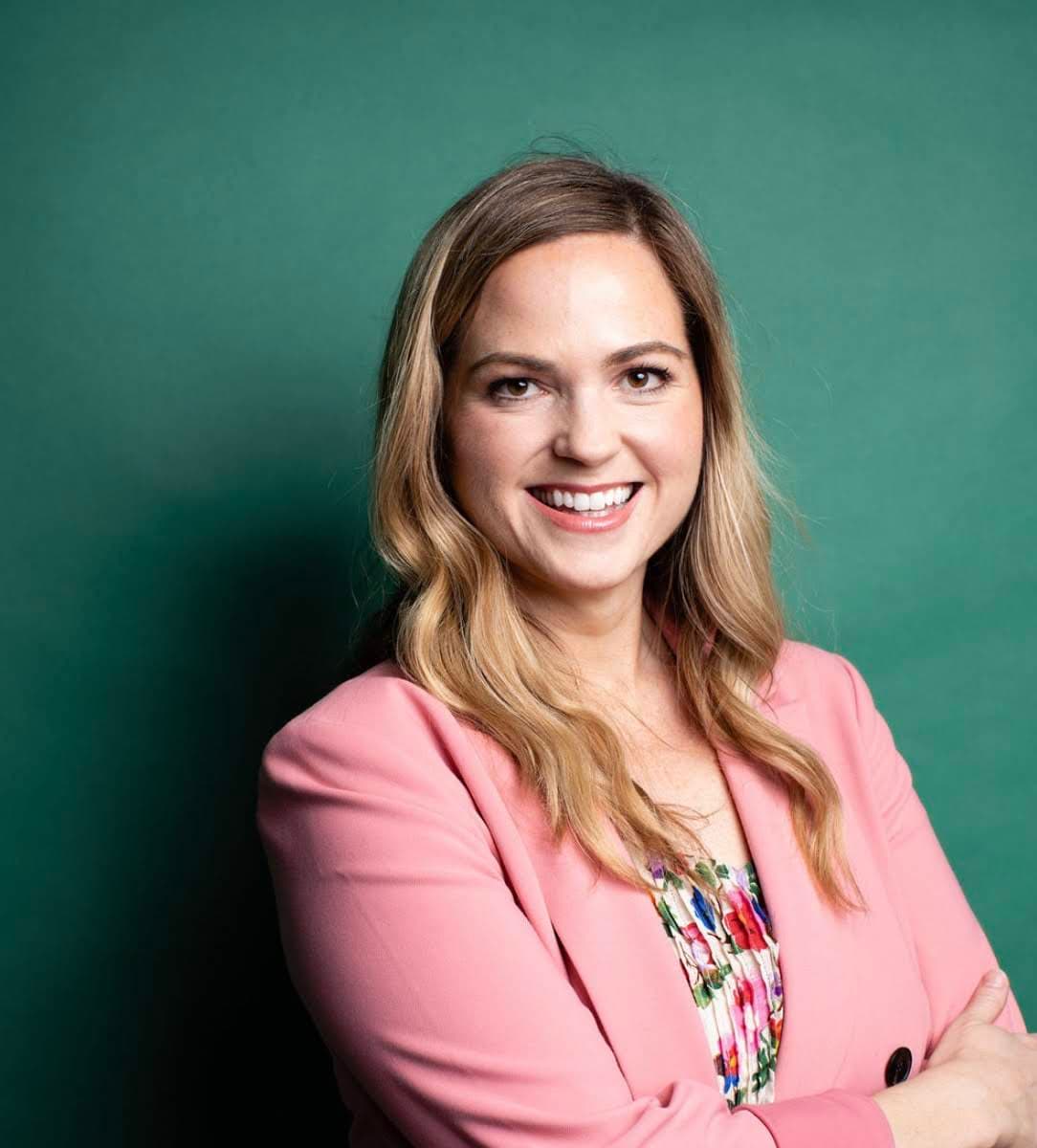
Dr. Jana Rundle
Licensed Clinical Psychologist