

Read the video transcript
Why does it feel like moms lose all of their freedom and partners just continue living the same life? Have you ever noticed this? Like your whole world as a new mom shifts overnight. Your body, your sleep, your schedule, your identity, you kind of lose all of it. You can't even leave the house without planning feeding times, diapers, having backup outfits. Even your thoughts are interrupted now by worries that you never experienced before or anxiety. Meanwhile, your partner still goes to work, still goes to the gym, still goes to meet friends, still showers without an audience, it can feel infuriating. Not because you don't love your baby and love your partner, but because your freedom evaporated and theirs didn't. So here's what's happening psychologically. Motherhood is an immediate full body transition. It's your hormones shifting, your identity shifting. It's all consuming. But parenthood or fatherhood, it can be more gradual. It's less socially restricted. There aren't these expectations placed on partners that there are on moms. So if you're feeling resentment, it doesn't mean that you're ungrateful. It doesn't mean that your relationship is doomed, but it might mean that you need more support or more equity in your relationship or more conversations about invisible labor. Think about it this way. Resentment is information. It's a signal that you need more support. So if this resonates, you're not alone. This season is beautiful, but it's also super unfair at the same time. Both things can be true.
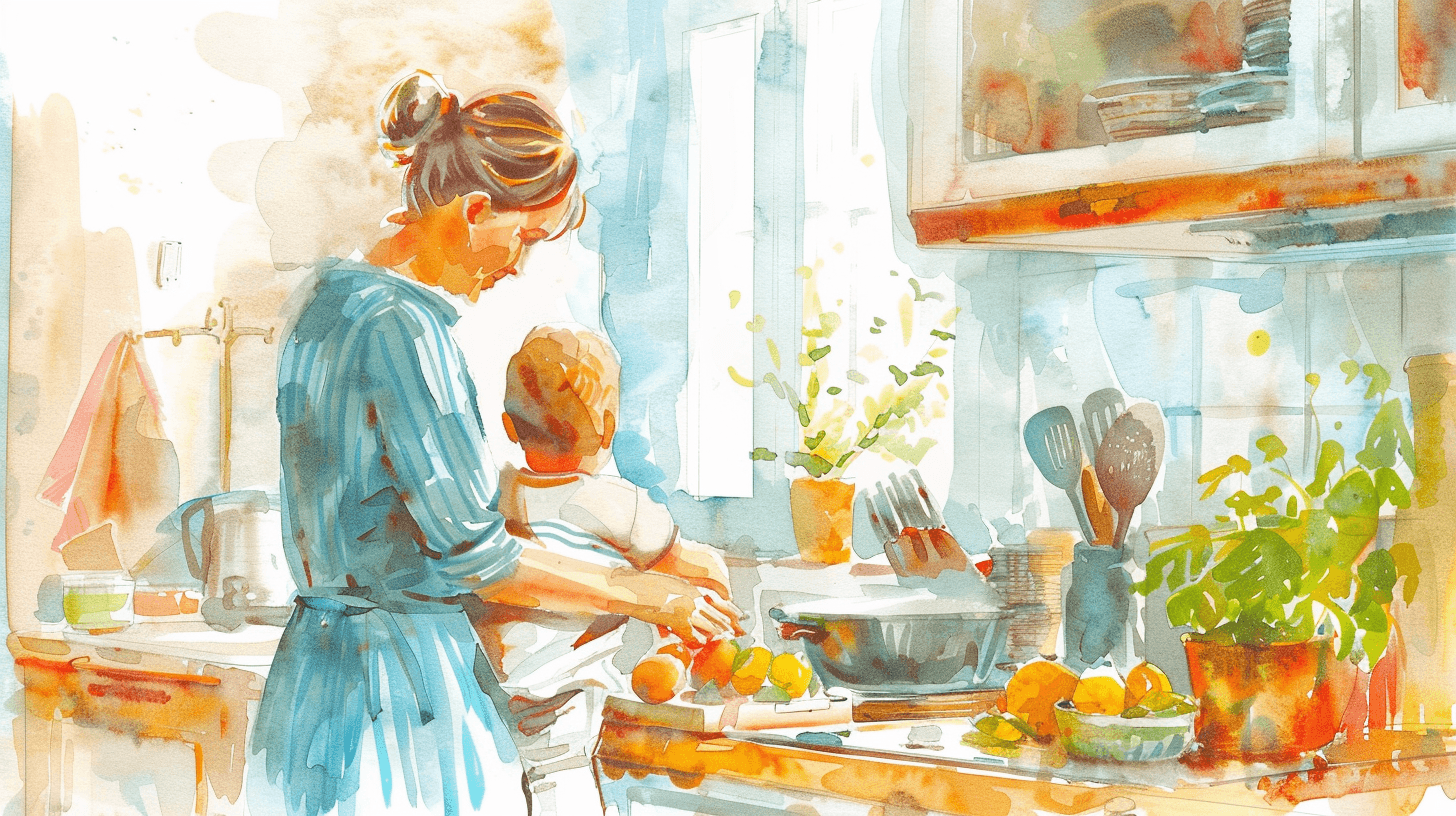
Your partner has been for a run, showered and sat down with their phone. You've been up with the baby, handled two feeds and started the laundry. You haven't brushed your teeth yet.
You're still on duty. They've already had time to themselves. That difference matters, and it helps explain why resentment can build after a baby.
Why do I resent my partner so much since the baby?
In the video above, I ask a question a lot of moms recognize: why does it feel like moms lose all their freedom while partners keep living the same life? Your whole world shifts overnight. Your body, your sleep, your schedule, your identity. You can't leave the house without planning around feedings, diapers and a backup outfit, and even your thoughts get interrupted by worries you never had before. Meanwhile, your partner still goes to work, still goes to the gym, still meets friends, still showers without an audience.
Part of that is how the transition works. Motherhood is an immediate, full-body change: your hormones and your identity shift all at once. For partners, the change can be more gradual, and it comes with fewer social expectations. You can love your baby and your partner and still feel furious that your freedom evaporated and theirs didn't.
The other part is the division of labor. On paper, things may look fairly equal. In reality, one person's life has been completely reorganized, and the other person's has stayed mostly the same. If you're the default parent, and moms so often are, you're the one anticipating the next feeding, the nap, the appointment, and losing flexibility, spontaneity and rest along the way.
Research backs up the "on paper" part. Researchers at Ohio State followed 182 dual-earner couples through their first baby, using surveys and time diaries (Yavorsky and colleagues, Journal of Marriage and Family, 2015). Before the birth, the couples' total workloads were close to equal. After it, mothers were doing more than two extra hours of work a day, and fathers about 40 extra minutes. Fathers' housework actually went down, even though they reported it going up. And if the researchers had relied only on the surveys, the gap wouldn't have shown up at all.
So both of you can honestly believe things are close to fair, while one of you feels the gap every day. That's where resentment grows.
The thinking work underneath all this is its own conversation: how to explain the mental load to your partner.
Is resentment a sign something is wrong with our relationship?
Resentment is information. It's often a signal that you need more support, more equity, or more conversations about the invisible work, and it's telling you something about the arrangement between you. Arrangements can change. Feeling it doesn't make you ungrateful.
You can love your partner and resent them. You can be grateful for what they do and furious about what they don't. This season can be beautiful and really unfair at the same time.
So put the resentment to use. When you're not in the middle of a fight, finish this sentence on paper:
"I resent that ________, and what I need is ________."
"I resent that you can leave the house whenever you want, and what I need is two mornings a week that are mine." The first half is the feeling. The second half is something your partner can actually do.
Why am I keeping score, and is it making things worse?
Who slept last night. Who showered. Who ate lunch sitting down. Who went to the gym, and for how long. A lot of moms keep some version of this tally, and feel a little ashamed of it.
Keeping score makes sense. When your work is invisible, the scoreboard is how you try to make it visible. It's a way of saying "I'm not imagining this."
You may remember different parts of the day. Making the work visible together can help, especially if you also count uninterrupted meals, sleep and time off. The goal is an arrangement you can both describe and follow through on.
A few things help more than a better tally.
Count rest and freedom, too. The most painful entries on the scoreboard are often the run, the nap, the ability to just leave. Equity after a baby has a lot to do with whether both of you still get rest and time of your own. Ask each other directly: "Do we both get real time off duty this week?"
Trade the tally for an agreement. When it's settled ahead of time who handles nights on which days and who owns bedtime, there's much less to count.
Say the score out loud once, as a request. "I haven't had a full hour to myself in three weeks. I need that to change." One clear request tends to get further than a running list of grievances at 10 p.m.
How do we actually rebalance?
The change I come back to most is having your partner own whole jobs. They take something completely off your plate, without needing to be asked, reminded, or managed. Laundry, medical, daycare, dinners, weekend nights. If you still have to remind them, you're still carrying it. My post for partners on the mental load walks through how to divide those jobs, and you can send it to yours.
A few things help the rebalance stick:
- Hold a short weekly logistics check-in. Fifteen minutes on the calendar and who's handling what.
- Renegotiate at transitions. Going back to work, a sleep regression, starting daycare. What you agreed to at six weeks probably won't fit at six months.
When we feel there's equity in our relationship, we often feel more supported. And when we feel supported, things at home tend to get calmer.
How do we repair after the resentment has built up?
Resentment that's been building for months comes out sideways: the heavy sigh, the sharp "I've got it," the snap over something tiny. Your partner reacts to the snap, you react to their reaction, and the real issue never gets talked about.
Name the pattern. "I've been building up resentment about how things are split since the baby, and I don't want to keep snapping at you. I want to fix what's underneath it."
Own your delivery, and keep your request. You can say "I've been short with you, and I'm sorry" and also "the split isn't working for me."
If you're the partner, acknowledge before you explain. "You're right, my life has changed a lot less than yours" lands very differently than "But I've been working all day." Leading with the explanation tells her the scoreboard is still on.
Come back quickly after a blowup. You'll still have bad nights. What helps is how soon one of you can say, "That got ugly. Can we try again?"
Resentment often softens after the pattern changes, though the feeling can lag behind. Trust gets rebuilt through repetition.
If the resentment has moved into eye-rolling, mocking, or shutting down, how postpartum depression affects your relationship explains why contempt is worth getting help for early.
Could this be postpartum depression or rage, and when should we get help?
Sometimes resentment is about the split. Sometimes it's also a symptom.
Irritability and frustration are listed symptoms of perinatal depression (NIMH, 2023). A review of research on anger and postnatal depression from the University of British Columbia found that anger can be a prominent part of it for some moms, tied to feelings of powerlessness and to expectations that weren't met (Ou and Hall, Birth, 2018).
A few signs it may be more than the division of labor:
- The anger feels out of proportion, or it scares you.
- You feel resentful of almost everyone, not only your partner.
- Things got fairer at home, and the anger didn't change.
- Underneath the anger you feel flat, hopeless, or numb most of the day, for two weeks or more.
If you're thinking about suicide or need crisis support, call or text 988. Call 911 if you or your baby is in immediate danger. For support that isn't an emergency, Postpartum Support International's HelpLine is 1-800-944-4773 (call or text).
If the signs above sound familiar, it's worth talking to someone who can evaluate what's going on. Managing postpartum rage and postpartum depression symptoms go deeper on what to watch for.
Help can be individual, as a couple, or both. Individual therapy fits when resentment comes with depression, anxiety, or rage, or when you want to sort out what you need first. Couples therapy can help when the same fight keeps repeating or one of you has started to shut down. A therapist who understands the postpartum period can help you renegotiate without either of you having to win. You don't have to wait until it's bad to get that help.
If you'd like to talk through what's happening at home, you can book a free 15-minute consultation. I see moms in person in Austin, TX, and online across Texas and 40+ PSYPACT states, and that first call is a chance to figure out what kind of support makes sense.
Sources
- Yavorsky JE, Kamp Dush CM, Schoppe-Sullivan SJ. The production of inequality: the gender division of labor across the transition to parenthood. Journal of Marriage and Family, 2015.
- Ou CH, Hall WA. Anger in the context of postnatal depression: an integrative review. Birth, 2018.
- National Institute of Mental Health. Perinatal Depression. 2023.
- 988 Suicide & Crisis Lifeline. What to Expect.
- Postpartum Support International. Perinatal Mental Health: Signs, Symptoms and Treatment and Get Help.
Specialized Postpartum Support
Get compassionate, evidence-based care tailored to your postpartum journey.
Start Your Therapy Journey
Work with Dr. Jana Rundle, a licensed psychologist specializing in maternal mental health.
Schedule Free ConsultationFrequently asked questions
- Is it normal to resent my husband after having a baby?
- It is common for resentment to grow when one person's freedom changes much more than the other's. Look at meals, sleep and time off as well as chores. The feeling can point to an arrangement that needs to change.
- Why do I keep score with my partner since the baby?
- A tally can be a way to make invisible work visible. Use it to identify what needs sharing, including uninterrupted rest, rather than staying in an argument about whose memory is correct. Clear agreements and follow-through give you something more useful to measure.
- Can resentment toward my partner be a sign of postpartum depression?
- Irritability can be part of depression or anxiety, alongside resentment about a real imbalance. Tell a clinician if anger is persistent, frightening or accompanied by hopelessness, numbness or other mood changes. For suicidal thoughts or crisis support, call or text 988; call 911 for immediate danger.
- Should we try couples therapy or individual therapy for resentment after a baby?
- Individual therapy can help you understand what you need and assess mood symptoms; couples therapy may help with recurring conflict and responsibilities. Some people use both. If you're afraid of a partner or there is abuse, seek confidential safety support rather than starting couples counseling.
- Does resentment after a baby go away?
- It may soften as the arrangement changes and follow-through becomes reliable, though feelings can take time to catch up. If it persists, support can help you understand what's still unresolved. You don't need to wait for a crisis to have that conversation.

Dr. Jana Rundle
Licensed Psychologist, PsyD, PMH-C